

Boards Are Replacing CEOs At The Fastest Pace In Over A Decade
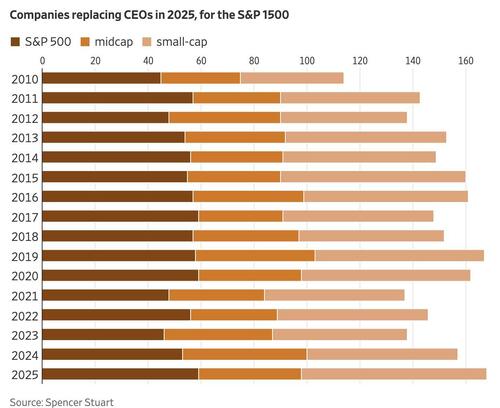
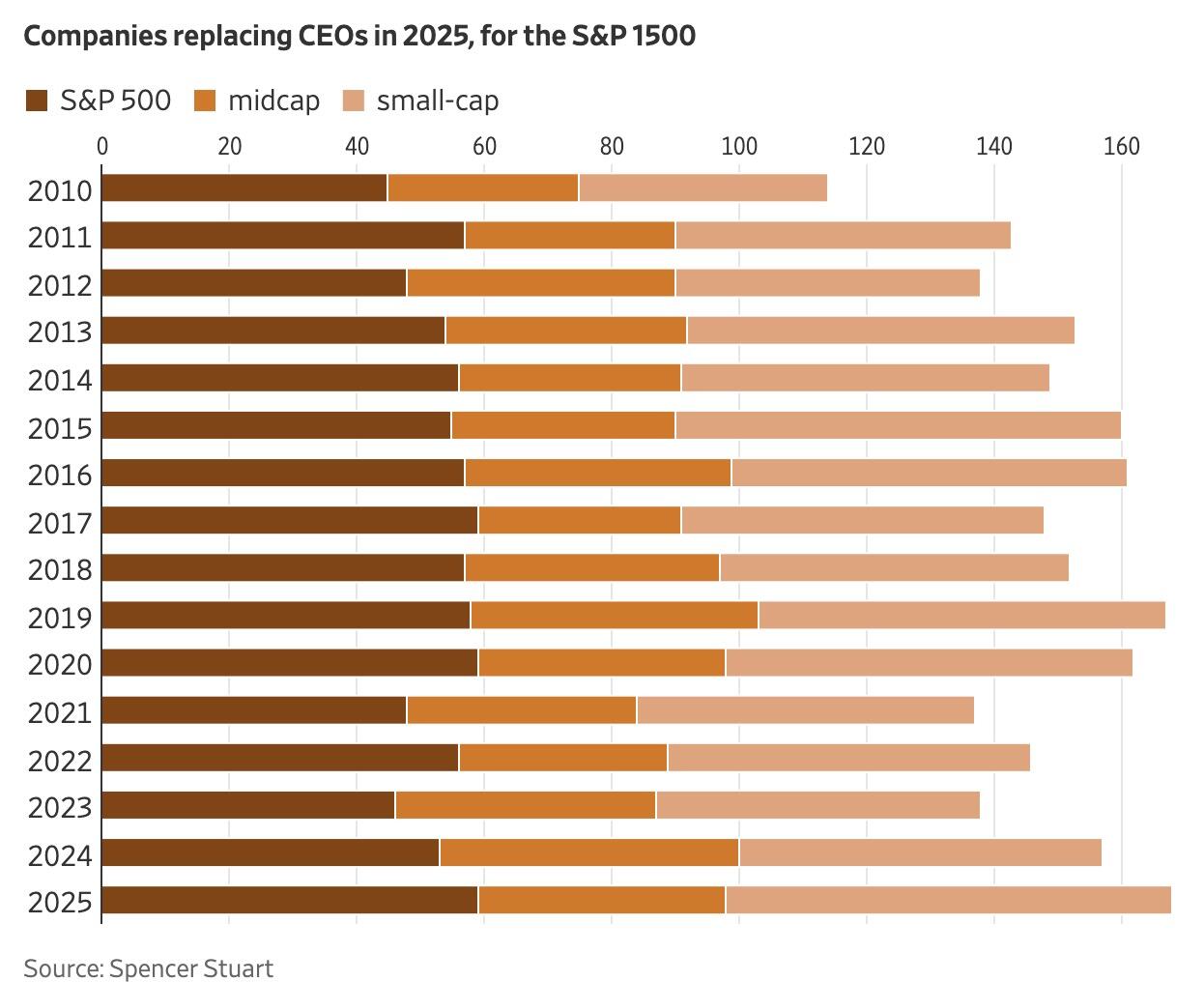
A historic wave of leadership change is sweeping corporate America. Across 1,500 of the largest publicly traded companies, roughly one in nine CEOs was replaced last year—the highest churn since the post-financial-crisis years., according to the Wall Street Journal.
The turnover has ushered in the largest cohort of new chief executives in more than a decade, and they’re arriving younger and, in many cases, with thinner résumés than their predecessors.
The shake-up hasn’t slowed in 2026. Companies including Walmart, Procter & Gamble and Lululemon Athletica installed new leaders early in the year. On a single February day, Disney, PayPal and HP each announced CEO changes. Grocery chain Kroger also tapped a new chief. Altogether, firms representing trillions in market value have either replaced or appointed top executives in just a few months.
Boards appear to be responding to a business climate that feels fundamentally altered. Artificial intelligence is reshaping operations, global trade norms are fragmenting and geopolitical tensions are harder to ignore. As executive recruiter James Citrin put it, “We’re in a new environment, and someone who’s going to replay the playbooks of the past is not necessarily right.” He added that if a new chief fails to build momentum quickly with both employees and investors, directors are even less patient than before.
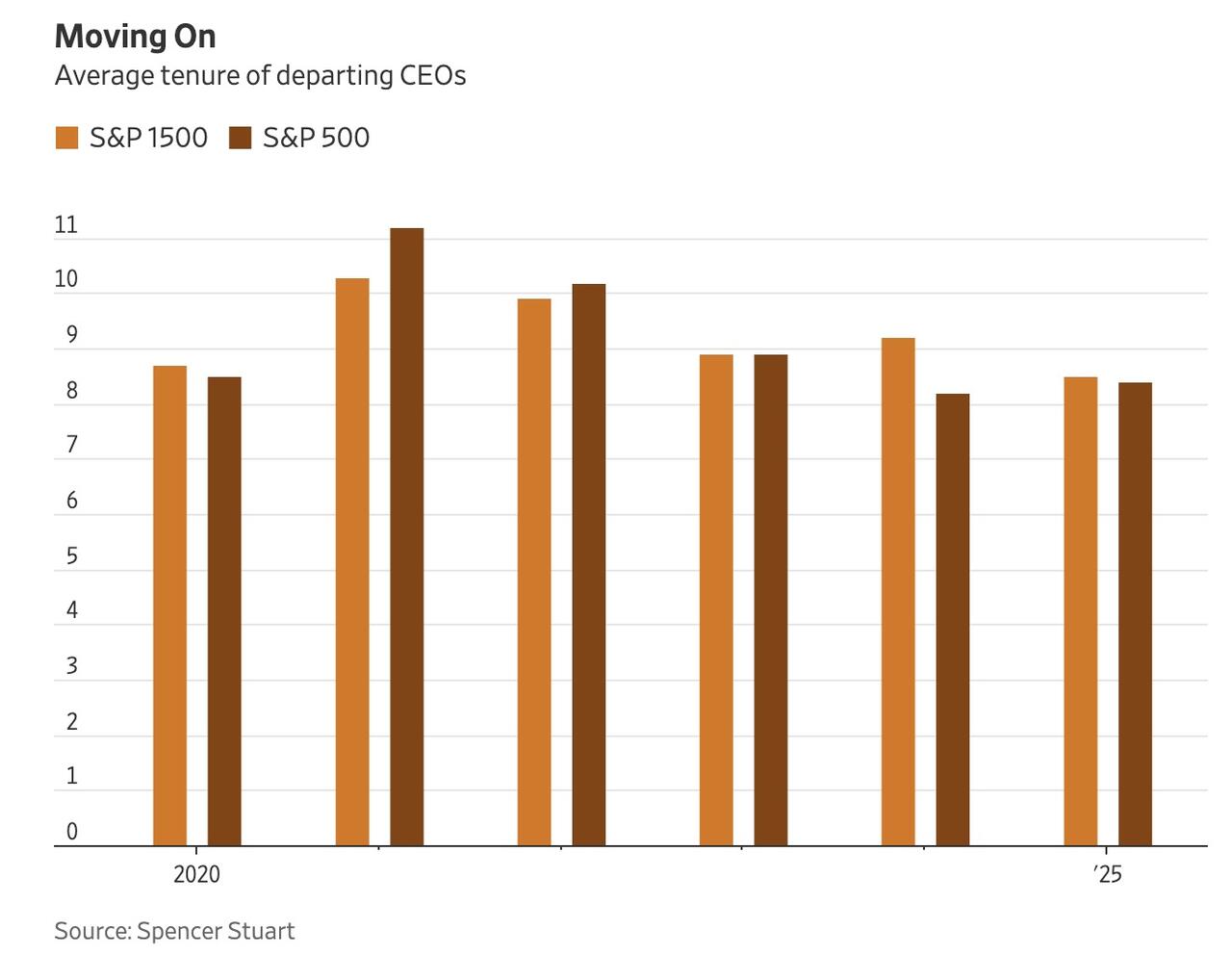
Some transitions were carefully choreographed. Warren Buffett handed leadership of Berkshire Hathaway to Greg Abel at the start of the year, completing a succession plan he had previewed years earlier. Others were abrupt. CarMax pushed out its CEO amid weak sales. At Codexis, the chief executive was replaced suddenly and the workforce reduced at the same time. Interim appointments, including at HP, signaled that not every board had a seamless plan in place.
The WSJ writes that retail illustrates how demanding the moment has become. Michael Fiddelke, newly installed at Target, found himself addressing sensitive political issues within days of stepping in, admitting to employees, “This isn’t the first message I imagined I’d send.” Industry executives say the job now requires reinvention rather than simple growth management, as pandemic aftershocks and cautious consumers create persistent headwinds.
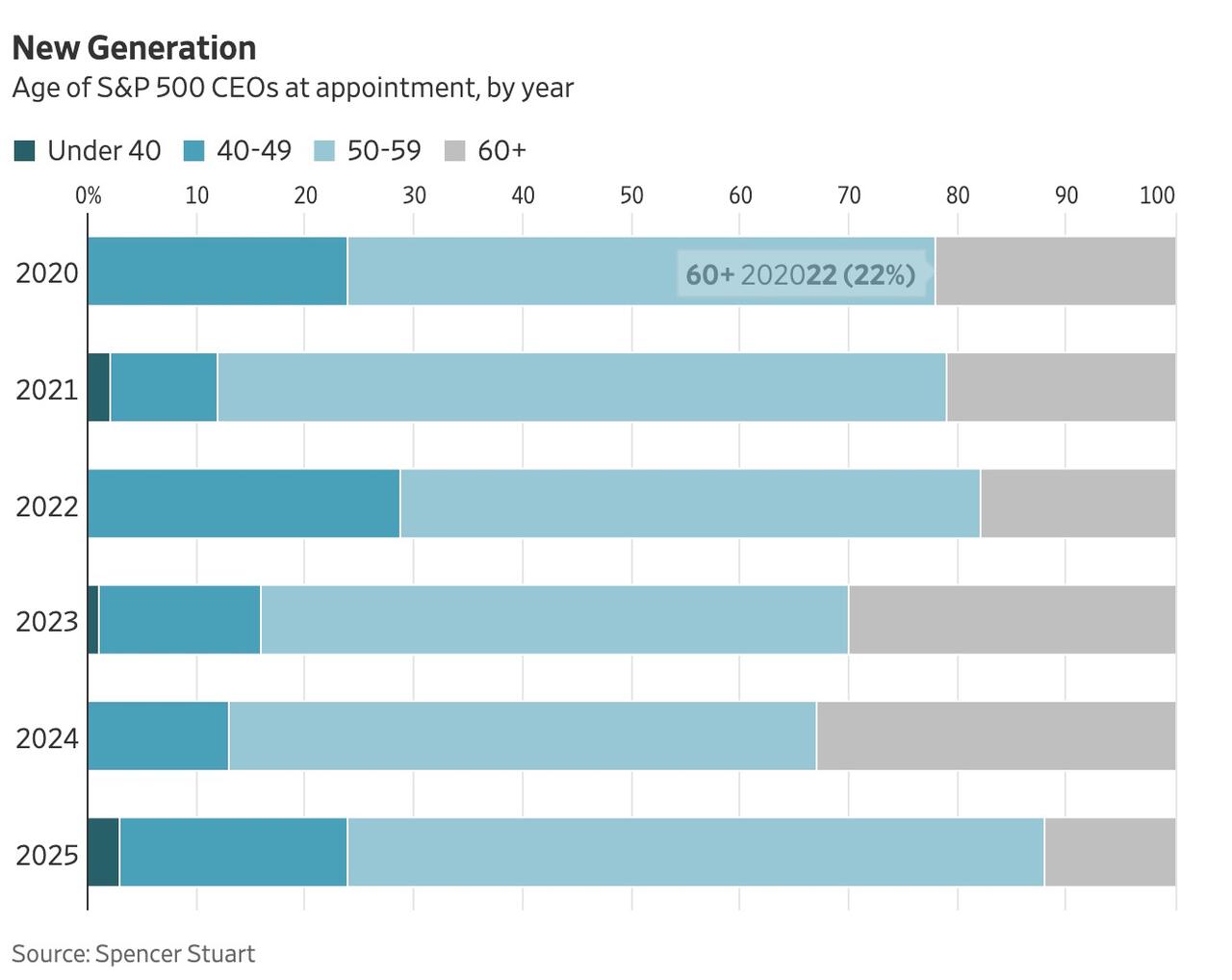
The demographic profile of incoming leaders has shifted as well. New CEOs averaged about 54 years old—roughly two years younger than the prior class—and more than 80% were first-time public-company chiefs. Many have never served on a corporate board. Paul Shoukry, promoted at Raymond James at age 42, is emblematic of the trend. Supporters argue that leaders forged in volatile conditions may be better suited to navigate what one board director called dramatic and permanent change.
Not all diversity trends moved forward. Women accounted for just 9% of new CEO appointments last year, down from the year before, and they remain underrepresented across the broader market. As boards accelerate succession and bet on fresh profiles, the leadership reset underway is reshaping not only who runs America’s largest corporations—but what experience they bring to the job.
Tyler Durden
Sat, 02/21/2026 – 21:35