
K-Shaped Economy Bites Back: Retail CRE Transactions For Shops, Malls Plunge
February U.S. commercial real estate transaction activity appeared soft on the surface, but Goldman analysts believe the weak initial print will likely be revised meaningfully higher. The most notable area of weakness in last month’s transaction data was across the retail space, which is not especially surprising as the K-shaped economy continues to pressure lower-income consumers.
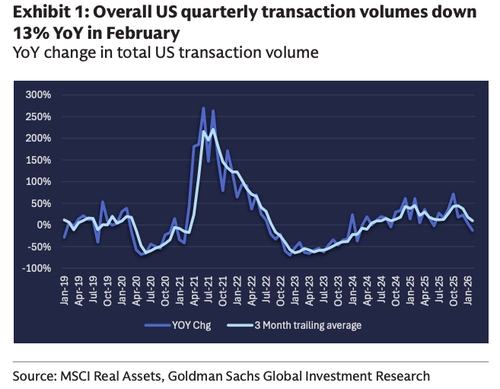
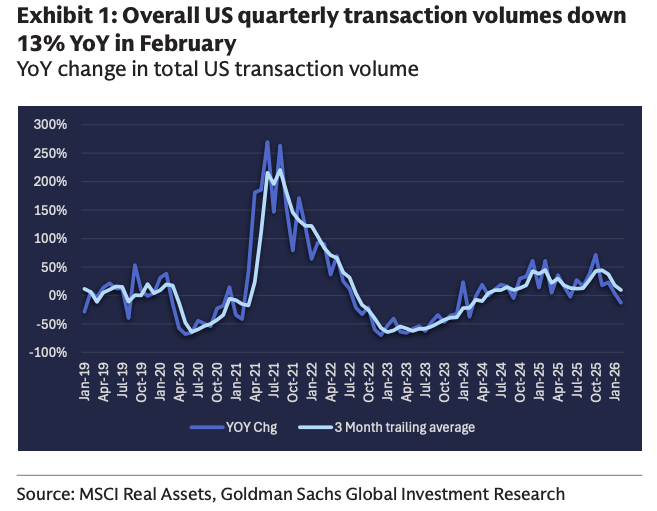
Goldman real estate analyst Julien Blouin wrote Wednesday that the initial February reading on CRE transaction volumes showed a 13% year-over-year decline. He noted that transaction data from MSCI Real Assets is typically “revised materially higher” and said the early print is not a major cause for concern.
Blouin added that prior months were revised higher by roughly 24% to 25% on average, suggesting the final February reading will likely show transaction growth in the high single-digit territory once the data is finalized.
February Transaction Volumes
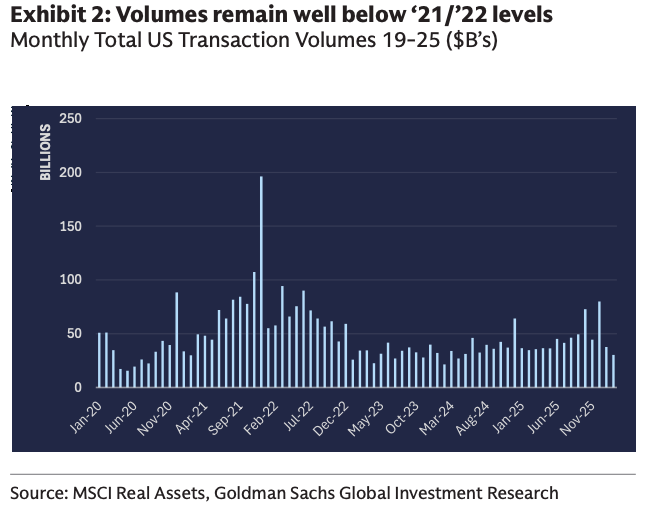
Volumes are muted and well below Covid surge. Need rates lower.
Deal activity is improving in some areas, especially office and industrial. Multifamily faced a much tougher comparison versus the same period last year, so the decline looks a lot worse than the underlying trend. The sharpest drop in CRE transactions was in retail, which includes shops, strip malls, convenience stores, restaurants, and malls.
CRE bucket breakdown for February:
-
Multifamily/apartments: down 24% year over year
-
Office: up 9%
-
Industrial: up 15%
-
Retail: down 61%
Retail CRE volumes plunged
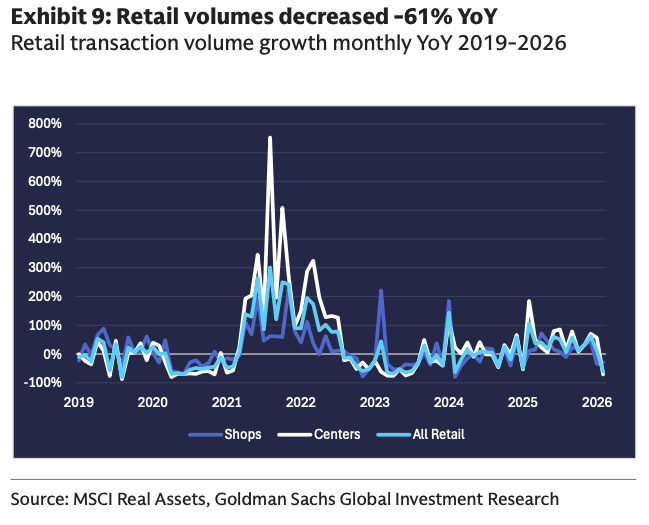
Blouin did not get into the details of the slump in retail deal activity, but it does appear buyers may still be selective in retail, due in part to the K-shaped economy, which is pressuring lower-income consumers’ ability to go out and spend at restaurants and shops.
Related:
The takeaway is that the sharp drop in retail CRE transactions likely reflects buyer caution around consumer-exposed properties, given everything we know about the K-shaped economy.
Professional subscribers can read the full Goldman note here at our new Marketdesk.ai portal
Tyler Durden
Fri, 03/27/2026 – 06:55