

Jet Fuel Prices Soar As War In Iran Ripples Through Global Aviation
Authored by Felicity Bradstock via OilPrice.com,
- Airlines, including Qantas, SAS, and Air New Zealand, have already announced airfare increases.
- Surging jet fuel prices and disruptions in the Strait of Hormuz are squeezing airline operations.
- Prolonged conflict could weaken travel demand and deepen pressure on global airline stocks.

As the war in Iran spills over into other parts of the Middle East, energy experts expect the price of several oil and gas products to soar over the coming months, driven by shortages. This will likely affect flight prices, with several airlines warning of anticipated price hikes. It could lead to a travel slump, as consumers wait for prices to fall again.
Australia’s Qantas Airways, Scandinavia’s SAS, and Air New Zealand are three of the airlines to have already announced airfare hikes in response to the ongoing conflict in the Middle East. The airlines cited the abrupt spike in the cost of fuel driven by the U.S.-Israel attack on Iran as the reason for the move.
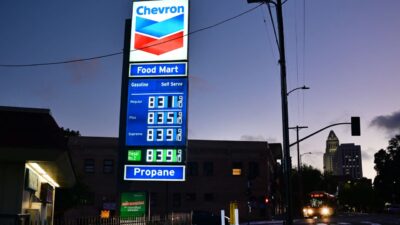
Jet fuel prices rose from between $85 to $90 a barrel before the attack on Iran to as much as $150 to $200 a barrel this week. This has led several airlines to reconsider their financial outlooks for 2026, as the uncertainty makes it impossible to predict where the price of fossil fuels will go in the coming months.
The war in Iran has led to the closure of the Strait of Hormuz, a key trade corridor connecting the Persian Gulf with the Gulf of Oman and the Arabian Sea. The strait is considered a chokepoint, as there are few alternative options for energy transportation, beyond some limited pipeline networks in the region. The dramatic reduction in the transport of fossil fuels through the strait, which is said to have created the biggest oil supply disruption in history, has driven oil and gas prices up sharply in recent weeks.
An SAS spokesperson told Reuters, “Increases of this magnitude make it necessary to react in order to maintain stable and reliable operations,” adding that the airline has implemented a “temporary price adjustment.”
Some airlines will be more affected than others by the increase in jet fuel prices. For example, several Asian and European airlines, such as Lufthansa and Ryanair, have oil hedging in place, meaning that a part of their fuel supplies is maintained at a fixed rate. However, some companies are concerned that even the hedged fuel reserves may be at risk.
Finnair hedged more than 80 percent of its first-quarter fuel purchases and now worries that the fuel may no longer be available if the conflict continues. Some major jet fuel producers, such as Kuwait, have already been forced to reduce production and export quantities in recent weeks.
Another challenge that is driving airfares up is the closure of several airspaces because of the ongoing conflict, which has affected several Asia-Europe routes. Some airlines have been forced to open alternative flight routes for passengers to reach their destinations. Pilots have also been forced to reroute to avoid the Middle East conflict, while capacity on popular routes has rapidly increased.
“Absent near-term relief, airlines around the world could be forced to ground thousands of aircraft while some of the industry’s financially weakest carriers could halt operations,” Deutsche analysts were reported to have said in a note to clients.
Meanwhile, some companies, such as British Airways, are confident that they can maintain their current ticket prices in the near-term until more is known about the mid- to long-term impact of the conflict. However, British Airways has cut certain routes due to continuing uncertainty, such as its seasonal flights to Abu Dhabi.
The uncertainty means that several airlines, across Asia, Europe, and North America, are seeing their shares plummet. Lorraine Tan, the director of equity research, Asia at Morningstar, stated, “The issue for the airlines now is that travel demand may be curtailed as costs become prohibitive for leisure travellers and as some companies start to limit business travel due to the uncertain outlook.”
On Monday, during a party conference in Florida, U.S. President Trump announced, “We have already won in many ways, but we haven’t won enough,” in reference to the war in Iran. Trump says. The president added, “We go forward more determined to achieve ultimate victory that will end this long-running danger once and for all.” Trump’s speech, as well as mixed messages from the president to several media outlets, have caused greater uncertainty, as there is no clear timeline for the conflict or an idea about when it might end.
The ongoing conflict in the Middle East has already caused significant energy supply chain disruptions, which have driven oil and gas prices up. Meanwhile, uncertainties about when the U.S.-Israeli intervention in Iran will come to an end have led stocks across a range of industries to fall sharply. While many airlines attempt to weather the storm, it is likely that we will see significant price increases in airfares in the coming months.
Tyler Durden
Sat, 03/14/2026 – 21:40